June 29, 2026 · 9 min read
Accounting outsourcing today is much more than bookkeeping and preparing reports. A quality service rests on dozens of processes, close collaboration between teams, change management and continuous improvement of internal systems.
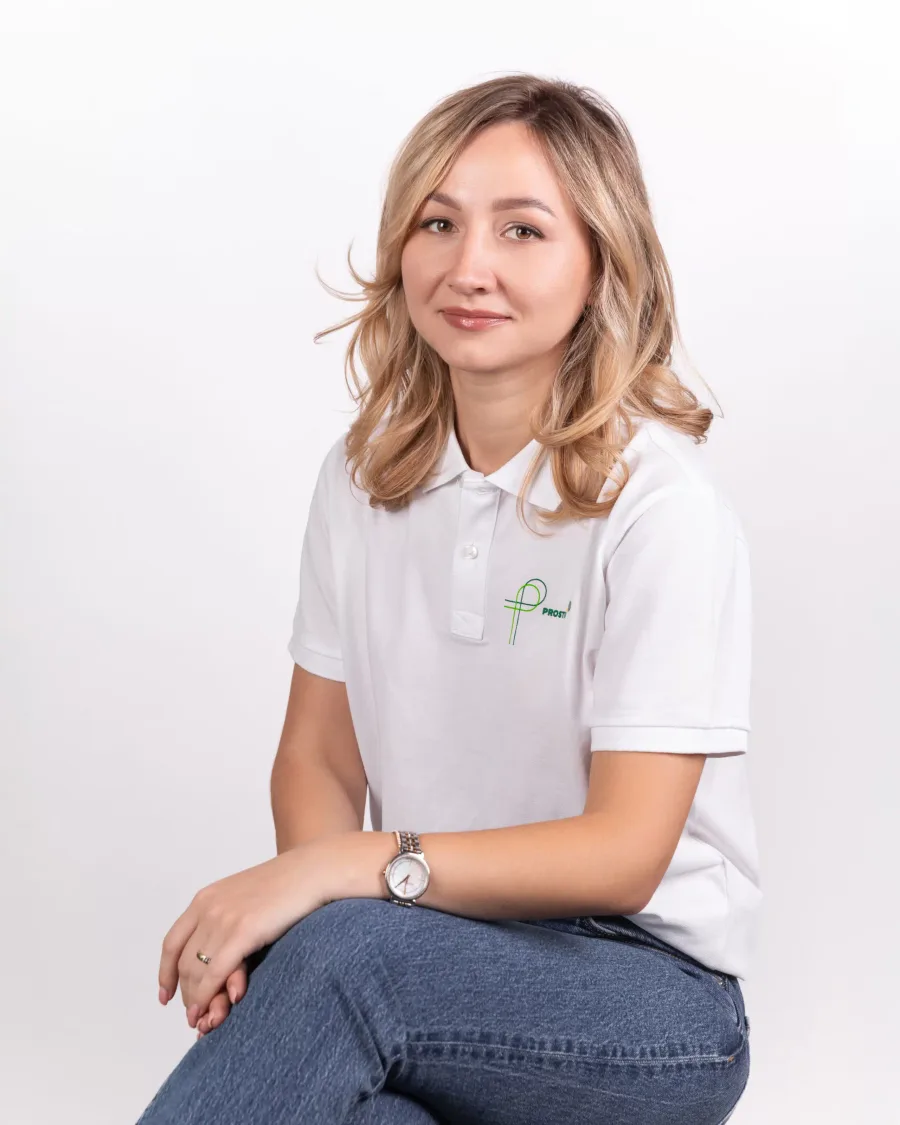
We spoke with Ilona Tanova, COO of accounting outsourcing at UHY Prostir, about how her role has changed over the past year, why building processes starts with understanding people, which trends are shaping outsourcing today and what it takes to create a service clients trust for years.
Ilona, a year ago we talked about your work as a Project Manager, and today you are COO of accounting outsourcing. How have your role, your responsibilities and your daily challenges changed since you moved into the new position?
Over the past year my role has become more strategic. Where I used to focus on the day-to-day support of individual clients and on coordinating my own team, today I coordinate all the teams in the accounting practice. I also spend a significant part of my time making the department more systematic: building and improving processes, standardizing them, helping teams work together more efficiently and managing change.
Many people picture accounting outsourcing as work that is all about reports and figures. Which part of your work as COO most often goes unnoticed by clients and even colleagues?
The least visible — and at the same time very important — part of the work is building a system that keeps the service stable regardless of change or external factors. That means coordination between teams, workload management, developing internal processes, introducing new approaches and managing risks. When everything works well, these processes are almost invisible, but they are what a quality client service is built on.
How do you recognize that a particular process needs to be reviewed or changed?
Usually the process itself tells you it needs to change. There are several signs I watch for. Recurring mistakes, for example, often show that the problem is not the people but the process itself, and that it needs a review. Delays and overtime on routine tasks are another signal: the process needs streamlining, because the current tool or algorithm is no longer efficient enough and needs updating.
Client feedback is just as telling. If a misunderstanding arises, we dig into the situation and find a way to put it right. We stay in constant contact with clients, asking how they rate our cooperation and what we could improve. That helps us spot potential problems early and prevent them before they surface.
For me it is important not only to react to problems but to understand their root causes.
Are there indicators or signals that tell you the department is working effectively?
Yes, of course. One of the key indicators is client loyalty — how satisfied our clients are and how much they trust us. When clients stay with us for 10–15 years, recommend us to their peers or go through major stages of their business’s growth with us, it shows they see us as a reliable partner. And that means we are moving in the right direction.
Another important indicator is quality and compliance: no penalties for our clients, deadlines met and no recurring escalations.
Team stability matters just as much to me, along with how engaged and proactive people are. Long tenure is common at our company — many colleagues have been here for 5, 10, even 15 years.
Which usually turns out to be harder: setting up a process or finding the right approach to people?
Finding the right approach to people. A process is an algorithm — mathematics, logic. It can be written down, tested, measured and improved. People are far more complicated, because each person has their own experience, motivation, working style, ambitions and worries.
That is exactly why management, to me, is first and foremost about working with people. Even the best process won’t work without a team that understands its value and is ready to support it.
What does quality client service in professional services mean to you?
For me, quality service means the client gets more than an answer to their question — they get confidence that their business is in good hands. It is about being proactive, taking responsibility, communicating openly and looking for solutions even in situations no template covers.
Which principles or personal qualities help you build long-term relationships with clients?
First and foremost, honesty and responsibility. A business can forgive a technical mistake if it is corrected promptly and openly, but it will never forgive hidden information or manipulation. Long-term partnerships are built when the client sees that you care about their result as much as they do. It is important not to promise the impossible, to be candid in difficult situations and to always honor your commitments.
In your work you sometimes have to talk about difficult things. How do you approach conversations with clients when you have to raise a problem or deliver unpleasant news?
I am convinced that difficult issues need to be discussed openly and without delay. It is important not just to name the problem but to propose ways to solve it. Even unpleasant news lands far better when clients see a professional approach, transparent communication and a willingness to take responsibility for the result.
How do you find the balance between controlling processes and trusting the team?
The balance rests on a transparent system. When we see that certain processes need to be optimized or changed, we do not resort to micromanagement and control every step — we introduce clear rules, standards and SOPs.
Right now we are developing a series of SOPs and expect them to make a real difference. Clear rules and standards make it easier to trust the team’s work.
At the same time, trust grows when those rules are followed and the team keeps showing initiative.
Which qualities do you value most in people who grow into leadership roles?
First and foremost: responsibility, the ability to make decisions, initiative and people skills. A good leader not only does their own job well but helps the whole team deliver.
In your view, what distinguishes a strong specialist from a future leader?
A strong specialist focuses on their own results. A future leader starts to think more broadly: they see how processes connect, take ownership of the shared outcome and think about how other people can grow. A leader is ready to share knowledge, is not afraid to delegate and answers for their team’s mistakes.
What mistakes do businesses make most often in organizing their accounting processes?
Most often, accounting is treated purely as a reporting function. In reality, well-organized accounting is an important source of data for management decisions. Other common mistakes include a lack of standardized processes, weak control over document flow, and communication between departments that is too slow or too complicated.
Which trends are affecting accounting teams and the outsourcing market most today?
The key trend is the digitalization and automation of routine work across the board. Artificial intelligence and modern ERP systems are taking over mechanical data entry. The accountant’s role is gradually shifting as a result: routine work is shrinking while demand for analytical skills and tax consulting is growing sharply. Outsourcing, meanwhile, is no longer just “accounting at a distance” — it is increasingly a strategic partner that helps businesses keep costs in check and scale safely.
Which professional challenge of recent years has influenced your view of work and management the most?
For me it was managing teams and client projects through constant change. That experience taught me to adapt quickly, make decisions under uncertainty and build processes that stay effective even when circumstances shift very fast.
What gives you the most satisfaction in your work today?
Watching people and processes grow. When the team gets stronger and clients receive better service because of systemic changes, nothing shows the value of the work more clearly.
What has kept you motivated to stay with the company and grow the practice for more than 10 years?
It is hard to believe sometimes, but I have been with the company for 12 years now. They have been fascinating, eventful years, and this is where I became the professional I am.
I value being able to influence how the business develops, put new ideas into practice and work alongside a professional team — with support, trust and mutual understanding always there. When the whole team is on the same wavelength and gives its all for a great result, that is genuinely motivating.
The company keeps evolving: its scale, its tasks and its challenges change all the time. There is always something new here that inspires you to move forward and keep growing with the team.
A few years from now, looking back, what would you like to see as your main contribution to the company and the team?
I would like to see the company as a powerful, resilient ecosystem that scales easily to hundreds of clients — on a strong operational foundation I had a hand in building.
Interviewed by Kateryna Bohdan