July 2, 2026 · 8 min read
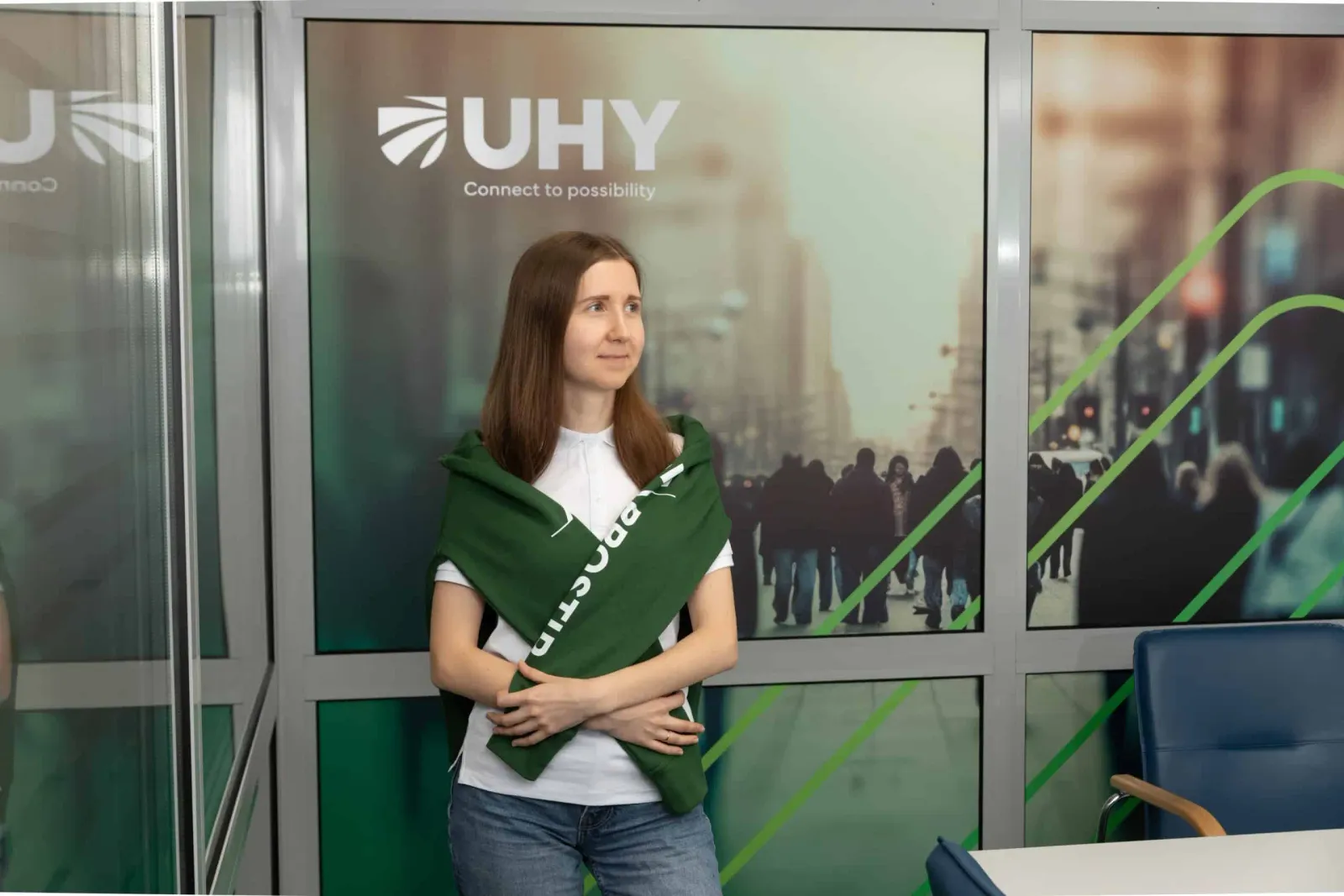
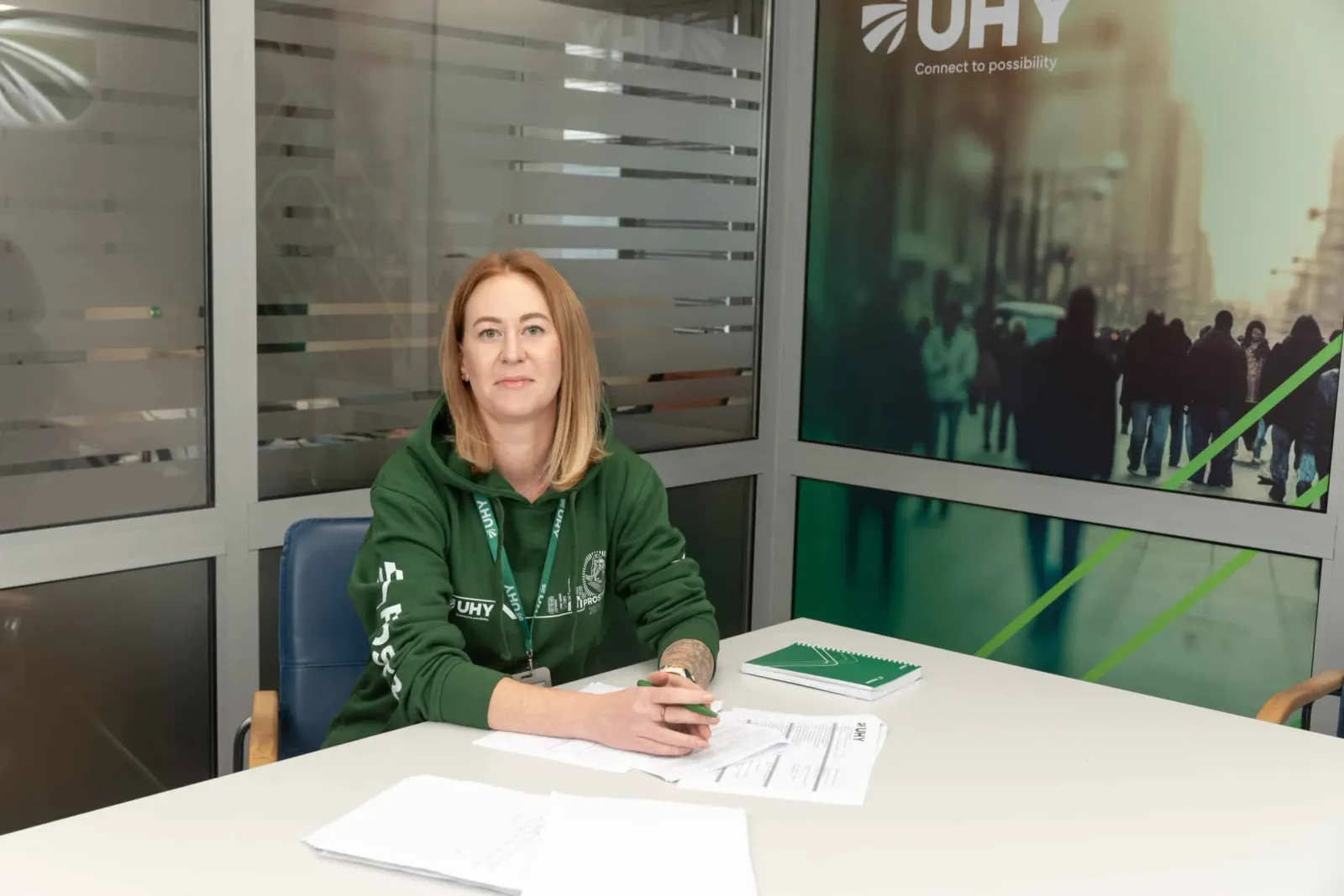
For almost ten years, Anastasiia Kozlenko has been building her career at UHY Prostir. She joined the firm as an accounting assistant while still a first-year student; today she heads the payroll practice and leads a team of specialists.
In this interview, we talked with Anastasiia about her first steps in the profession, what makes payroll work distinctive, working with a team and the challenges of a leadership role. We also spoke about how persistence, a genuine desire to learn and the support of colleagues help you build a career and find your place in the profession.
Nastia, tell us how you started at UHY Prostir. What were your first impressions of the company?
I remember my start at the company quite well. I was very nervous: I had just finished the first year of my bachelor’s degree and had only a basic grasp of payroll. At the same time, I really wanted to learn and get practical experience. What I remember most is the atmosphere — friendly, welcoming, open, yet professional. From the very first days my colleagues were ready to help and share what they knew, and that support meant a lot.
You began your professional path at UHY Prostir while still a student. What was your first role in the company, and what did you find hardest at the start?
I came in as an accounting assistant. My first tasks were organizing documents, compiling registers and posting transactions in the accounting systems. Later I got involved in preparing reports.
The hardest part was getting to grips with the professional terminology, accounting entries and specialized software — we had not covered any of that in the first year of university. I wrote down every process down to the smallest detail, so that I could always go back and retrace the exact sequence of steps.
In fact, UHY Prostir became a real school of life for me as an accountant. Later, in lectures, the material was much easier to grasp because I had already lived most of it in practice.
How did your understanding of the accounting profession change over time? What was the biggest discovery for you in this field?
At first, accounting seemed to be mostly documents, numbers and reports. Over time I realized it is much more than that. An accountant has to understand business processes, legislation, risks and the client’s needs. It is not enough to record a transaction correctly — you also need to understand what stands behind it and how it affects the business as a whole. The biggest discovery was how much analysis matters, and how valuable it is to see the way different processes connect.
Over the years you have worked on a wide range of projects and practice areas. Which experience helps you most today as a team leader?
The most valuable experience was working on very different projects. It taught me to look at tasks more broadly — to see not just a single operation but the whole process.
Over time I also came to understand that there is always a way out, even in the most difficult situation. My managers and colleagues helped me enormously with that: I could always turn to them.
Now I try to run the team so that people are not afraid to ask questions or ask for help — so that they keep learning and growing instead. Creating an environment where everyone can develop professionally matters just as much to me.
When did you realize that payroll was the field you wanted to go deeper into?
Back at university I was drawn to pay and taxation. Later, at work, I joined a large payroll project. It was hard at the beginning, but in time I realized this was my thing.
Payroll is painstaking work with a lot of responsibility. Yet I enjoy the work itself — especially when a client is happy with the result. Payroll has also seriously sharpened my analytical skills. It is an area where everything has to add up perfectly, and when something doesn’t, you need to work out why, find a solution and fix the problem.
How does payroll differ from the traditional idea of accounting? What needs special attention in this work?
Payroll deals directly with people, so even a small mistake can have tangible consequences for an employee. That is why accuracy, meeting deadlines and keeping up with legislative changes matter so much in this field. Payroll also means working with sensitive information, so a high level of confidentiality and responsibility is part of the job.
Payroll often involves sensitive information: salaries, personal data, deadlines and legislative changes. What principles are key for you when working with such processes?
For me it is, first of all, responsibility, confidentiality and a systematic approach. It is important to follow the established procedures strictly, check the results carefully and keep information properly protected. Continuous learning matters just as much: legislation and payroll requirements change constantly, and you have to respond in time.
What, in your view, is the hallmark of a well-designed payroll process?
A good payroll process runs smoothly and predictably. It is important to set clear deadlines and stick to them. As a rule, once a year we agree on a payroll calendar and then follow it.
It is equally important that everyone involved understands their role, the order of the steps and why the deadlines matter. Every detail and nuance should also be written down in working instructions, so that anyone involved in the process can read them and follow a clear procedure.
Automation is another telling sign. It saves working time and reduces the risk of human error.
Your team works in different set-ups — one of your colleagues is fully remote. How do you keep communication effective and everyone engaged in shared processes?
It is important to me that every team member has access to the information they need and understands the current priorities. We regularly talk through work matters, use shared task-planning tools and stay in constant touch. When we launch new projects, we also record our meetings and build up a training library. Anyone can go back to the material at any moment, watch or listen to it again and take on their tasks with confidence.
You started your own career at the company as a student. Does that experience shape how you support newcomers on the team today?
It certainly does. I remember being in their shoes, so I try to give them as much information as I can when bringing them into new processes. At the same time, we introduce new tasks gradually and in manageable portions, to avoid information overload.
I remember well how important it is at the start to have support and to be able to ask questions. So I try to create an environment where junior colleagues can learn comfortably, gradually take on responsibility and never be afraid to ask for help.
What qualities do you value most in the people you work with?
Most of all I value honesty, responsibility, a genuine wish to understand the process rather than just go through the motions, attention to detail and the ability to work in a team. It also matters to me that people are ready to take the initiative and look for solutions, not just point out a problem.
What is the biggest challenge for you now as head of the payroll team? And on the flip side, what motivates you most in this role?
The biggest challenge is keeping the quality of our work consistent amid constant change and a growing workload. What motivates me most is watching the team develop, improving our processes and seeing what we achieve together.
How did you picture your professional development at the start of your career, and what helped you most along the way?
At the beginning I was focused above all on doing my job well, learning constantly and improving my skills. I wanted to grow and take on new challenges, however difficult they might be.
Looking back, I realize that what helped most was persistence, a readiness to dig into complex cases, responsibility, the support of colleagues and the trust of management.
How do you see the payroll team’s role in the company’s development going forward?
Above all, in automating and streamlining payroll processes. That will cut the time spent on routine operations and leave more room for consulting and client work.
What would you advise someone who is just starting a career in accounting or payroll?
Don’t be afraid to ask questions, pay attention to detail and keep learning. In this field nobody knows everything from day one, but the desire to grow and the willingness to keep working on your skills always pay off.
And finally: what does “being in the right place” in the profession mean to you?
For me, being in the right place means enjoying what I do and knowing that it has value. It is the feeling you get when you look forward to new challenges and see meaning in your work every day.
Interviewed by Kateryna Bohdan